
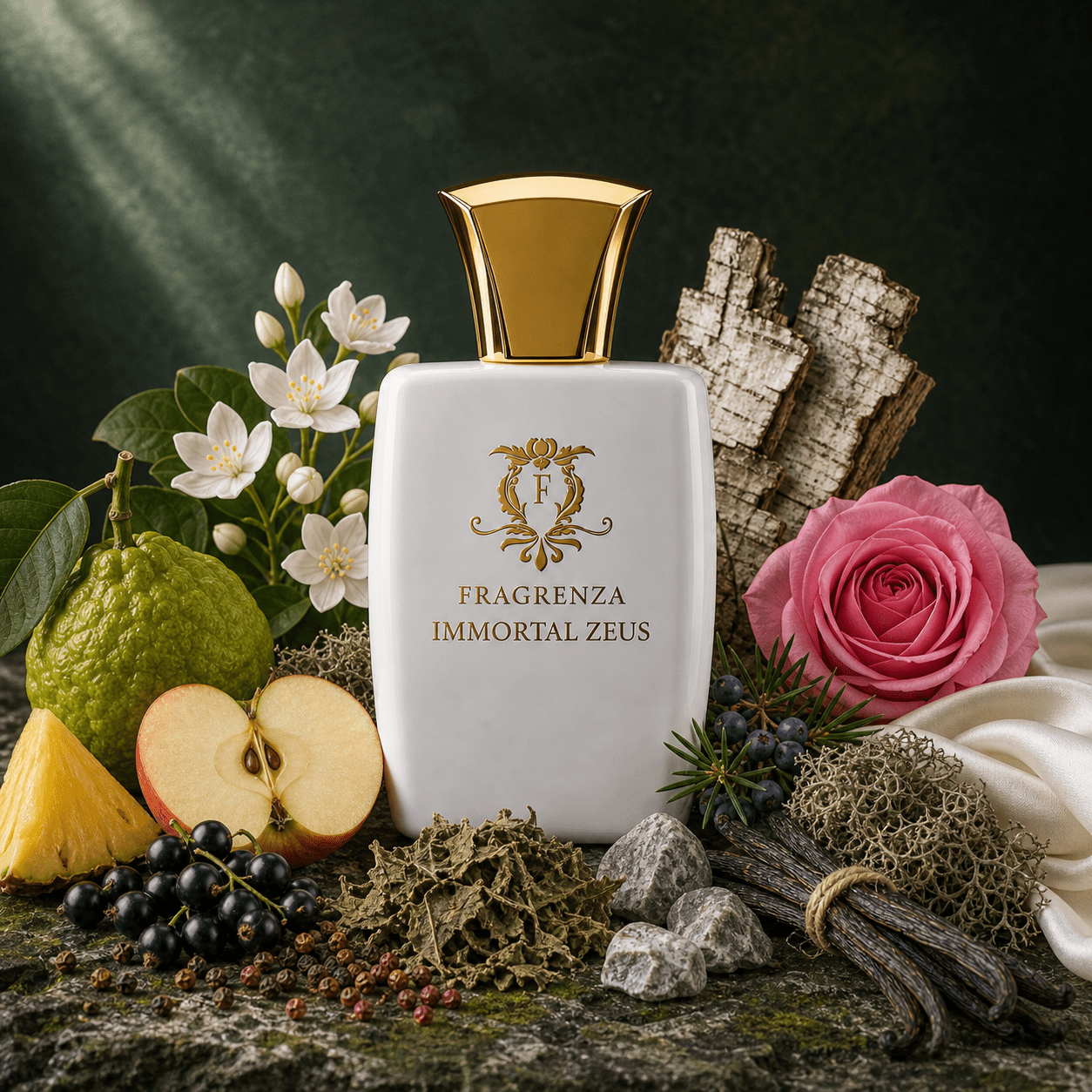
Creed Aventus, released in 2010, is one of the most-cited masculine niche fragrances of the past two decades. The composition triggered a cultural moment in masculine perfumery that continues to define what “wow” masculine fragrances mean for a generation of wearers. Below is the brief history of Aventus, why it became culturally significant, and how the affordable dupe market matured around it.
The 2010 launch
The House of Creed dates to 1760 in London, but modern Creed under Olivier Creed has operated as a niche luxury house since the 1970s. Aventus, composed by Olivier Creed and his son Erwin Creed, launched in 2010 — a fruity-smoky-leather composition built around pineapple, blackcurrant, birch, ambergris, and oakmoss.
The launch timing was significant. By 2010, fragrance forum culture (Basenotes, Fragrantica, Reddit’s fragrance subreddit) had matured into a substantial community. YouTube fragrance review channels were emerging as a parallel content category. Aventus arrived just as fragrance media was about to explode in visibility — and the composition’s distinctive character and substantial projection made it ideal for the format.
The cultural moment
Between 2012 and 2018, Aventus became the most-cited masculine niche fragrance in the world. YouTube fragrance channels reviewed it dozens of times across multiple creators; Reddit threads dissected its batch variation; collectors traded specific batch codes at premium prices on grey-market sites.
What made Aventus culturally significant: the composition genuinely delivered on its niche-luxury positioning. The pineapple-and-blackcurrant opening was distinctive without being polarising; the birch-and-jasmine heart was substantive without being aggressive; the ambergris-musk-oakmoss base provided generous projection without overwhelming. The composition flattered most chemistries while remaining unmistakably “Aventus” at conversational distance.
The batch variation phenomenon
An unusual feature of Aventus history: noticeable batch variation across production runs. Older batches (2010-2015) leaned smokier and more obviously birch-tar-led; newer batches (2018+) lean brighter and more obviously fruit-led. Collectors traded specific batch codes — A4218G1, 11G01, 17C01 — at premium prices for the lots that delivered the most-cited classic Aventus character.
This batch variation has fueled an entire grey-market sub-economy and contributed to the cultural mystique around the composition. The “best” Aventus became something one had to hunt for rather than simply purchase off the shelf.
The dupe market emerges
The combination of Aventus’s cultural visibility and its retail price ($470+ for 100ml) made it an inevitable dupe target. By 2015, dozens of affordable Aventus-inspired compositions appeared in the market — most of them disappointing copies, a few credible reconstructions.
The Fragrenza catalogue’s Creed Aventus dupe emerged as one of the more credible Aventus dupes — capturing the pineapple-birch-ambergris signature with substantial fidelity. The opening pineapple is slightly more candied than the Creed original, and the longevity is slightly shorter (6-8 hours vs Creed’s 8-10), but the heart-and-drydown signature is genuinely close to the original.
The Cologne extension
In 2018, Creed released Aventus Cologne — a lighter, citrus-led interpretation of the original Aventus character. The Cologne version emphasized the citrus opening over the birch-and-leather heart, producing a more warm-weather-friendly version of the Aventus signature. Captured affordably by Creed Aventus Cologne dupe.
Why Aventus matters in fragrance history
The Aventus phenomenon demonstrates several things about modern niche perfumery. First: cultural moments matter more than perfumery craft alone — Aventus succeeded both because the composition was strong AND because it arrived at a moment when fragrance media culture was ready to amplify it. Second: distinctive character beats universal appeal — Aventus succeeded by being unmistakably “Aventus” rather than by trying to be universally accessible. Third: substantive performance pays — Aventus’s longevity and projection rewarded the high retail price for wearers who valued substantive niche-luxury wear.
The compositions that have followed in Aventus’s wake — the “fruity-smoky masculine” category that didn’t really exist before 2010 — owe much to Aventus’s commercial pioneering. Without Aventus’s success, the niche-luxury masculine category might have remained dominated by traditional fougère and oriental directions.
The Aventus wardrobe
For wearers exploring the Aventus phenomenon, the entry composition is the original (or its dupe, Creed Aventus dupe). Add Creed Aventus Cologne dupe for warm-weather wear (the Aventus Cologne direction), and you’ve covered the brand’s two main Aventus expressions. For confident wearers comparing modern Aventus to other “wow” masculines, the natural next step is Tom Ford Ombré Leather dupe (the polished Tom Ford direction) or Viktor & Rolf Spicebomb dupe (the Spicebomb spice-leather direction).