
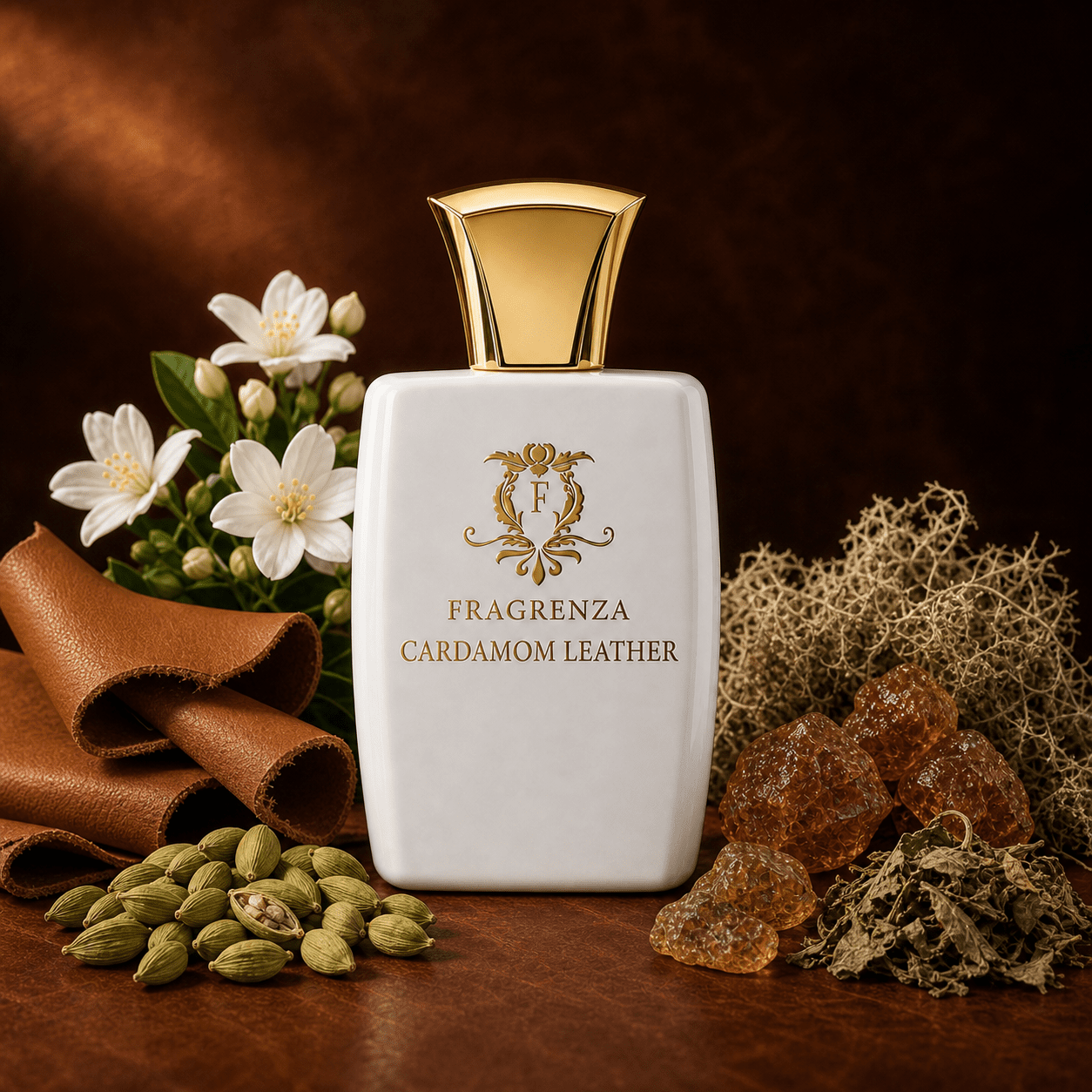
The fragrance dupe industry — affordable reconstructions of luxury and niche compositions — has grown from a small grey-market presence in the 2010s into a billion-dollar commercial category in the 2020s. Below is the brief history of how dupes became mainstream, why luxury brands have been unable to stop them, and how the modern dupe market produces compositions that capture original character at a fraction of retail cost.
What “dupe” means in fragrance
A fragrance dupe is an affordable composition designed to capture the central character of a more expensive original — typically a niche or luxury release at $200-$400 retail, reconstructed by an independent house at $30-$50. The dupe doesn’t claim to be the original; it’s marketed as an inspired-by alternative that delivers the signature character without the discretionary-purchase price tag.
Dupes differ from counterfeits in critical ways. A counterfeit uses the original brand name and packaging while delivering substandard juice; a dupe uses its own brand name and packaging while delivering a credible reconstruction of the original’s olfactive signature. Counterfeits are illegal; dupes are entirely legal — fragrance compositions cannot be copyrighted, only trademarked, so anyone can recreate any composition under a different brand name.
The 2015-2020 inflection
The modern dupe industry traces its inflection point to the rise of fragrance YouTube reviews and TikTok recommendations in the late 2010s. As fragrance content became one of the largest verticals on social media, two parallel trends emerged: more wearers became aware of niche-luxury compositions like Baccarat Rouge 540 ($325 for 70ml) and Tom Ford Ombré Leather ($245 for 100ml), and more wearers became aware that affordable alternatives existed that captured the character.
The result: a generation of fragrance buyers willing to wear affordable-niche compositions for daily life while reserving the original luxury releases for special occasions. The math became hard to argue with — a Caramelle Rosse at $40 captures most of the BR540 signature at 12% of the retail cost. For daily wear, the value proposition is compelling.
How modern dupe houses make compositions
The modern dupe house operates differently from the counterfeit grey market. Legitimate dupe houses commission professional perfumers to reconstruct the central character of luxury originals using available synthetic materials. The reconstruction typically captures 70-85% of the original’s character — the heart-and-base signature is genuinely close, while the opening top notes typically lag in polish.
Brands like Fragrenza operate with this model: each release identifies a specific luxury original (Tom Ford Ombré Leather, MFK Baccarat Rouge 540, Xerjoff Erba Pura), commissions a reconstruction that emphasizes the original’s central character, and markets the dupe transparently as an inspired-by alternative.
The catalogue covered
The most-recreated luxury originals in the modern dupe market are predictable — the compositions with the largest commercial reach and cultural visibility. Maison Francis Kurkdjian Baccarat Rouge 540 dupe (BR540), Tom Ford Ombré Leather dupe (Tom Ford Ombré Leather), Creed Aventus dupe (Creed Aventus), Xerjoff Erba Pura dupe (Xerjoff Erba Pura), and Chanel Coco Mademoiselle dupe (Chanel Coco Mademoiselle) lead the modern dupe catalogue.
Why luxury brands haven’t stopped dupes
Fragrance compositions cannot be copyrighted under any major jurisdiction’s law. Only the brand name, bottle design, and marketing materials are protected by trademark. The juice itself — the actual scent — sits in olfactive territory that resembles unprotected recipe information. A perfumer can examine a luxury composition, identify its component materials, and reconstruct the signature without legal exposure.
Several luxury brands have attempted to introduce “fragrance fingerprinting” technology that would let them identify dupes, but the technology has produced limited success. The fundamental issue: olfactive signatures are simpler than the legal arguments needed to protect them. A composition is just chemistry, and chemistry cannot be owned the way images or text can.
Where the dupe industry is going
The dupe market has consolidated around a smaller number of credible houses (Fragrenza among them) while the broader unbranded counterfeit market continues to operate at the grey-market periphery. Legitimate dupe houses compete on composition quality, distribution transparency, and brand presentation rather than price alone — recognising that wearers want credible alternatives, not aggressive substitutes.
For wearers exploring affordable niche perfumery, the modern dupe market offers genuine value. The signature character of dozens of luxury originals is now available at affordable pricing, which has democratised access to niche perfumery in ways the luxury market never anticipated.
The dupe wardrobe
A modern dupe-focused fragrance wardrobe can cover most luxury original directions for under $200 total. Tom Ford Ombré Leather dupe for polished daily wear, Maison Francis Kurkdjian Baccarat Rouge 540 dupe for compliment-magnet evening wear, Creed Aventus dupe for confident masculine wear, and Chanel Coco Mademoiselle dupe for refined feminine daily wear. Four bottles, four major luxury directions, daily-wear pricing — the value proposition that has reshaped modern fragrance buying.