
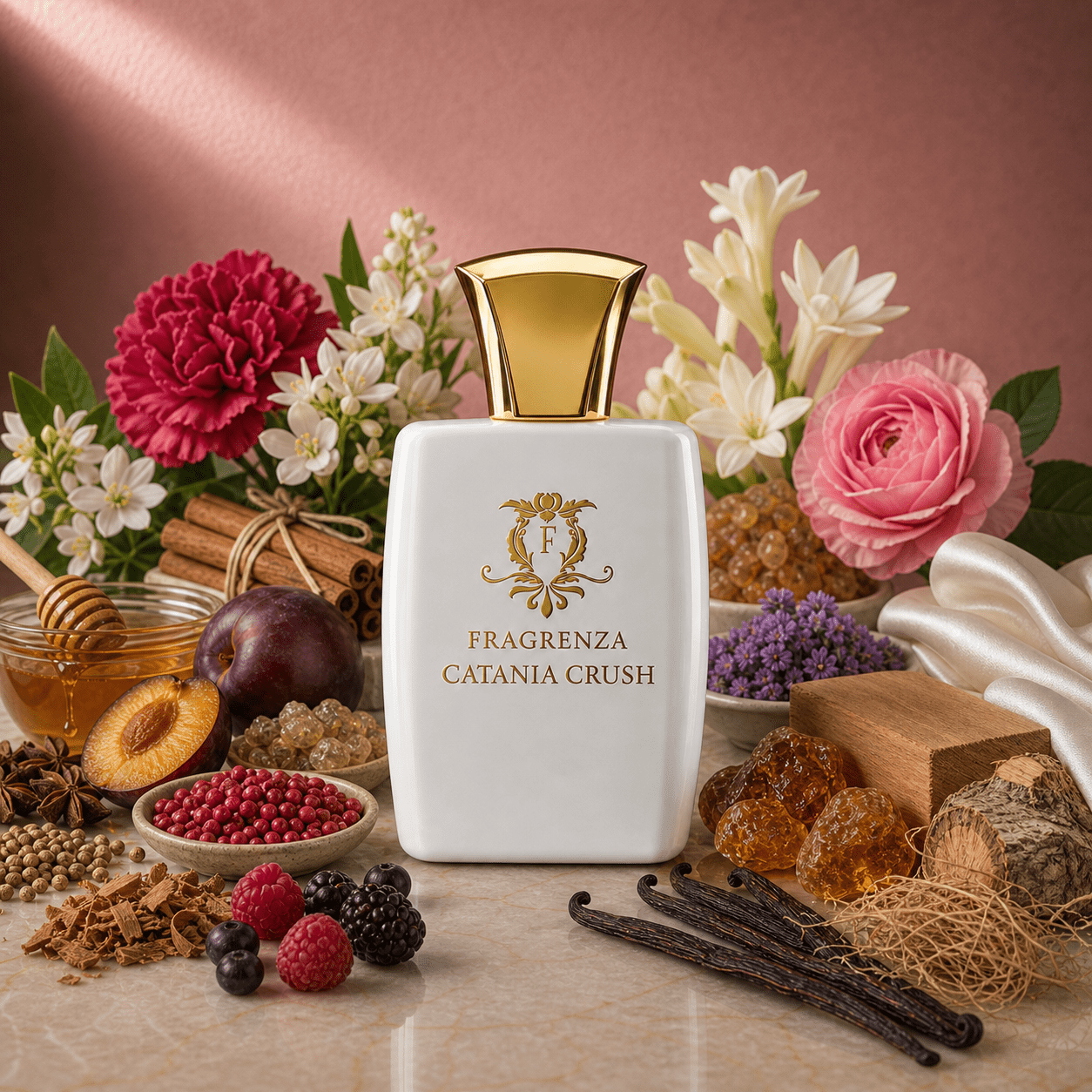
Feminine perfumery has evolved dramatically over the past four decades — from the dense vintage orientals of the 1980s through the lighter modern feminines of the 2000s to the gourmand-floral dominance of the 2020s. Below is a brief history of how feminine perfumery transformed across this period, with notes on the affordable compositions that capture each era.
The 1980s: vintage orientals dominate
The 1980s defined feminine perfumery’s vintage-oriental era. Dior’s 1985 launch of Poison — a dense plum, tuberose, honey, opopanax, amber composition — set the tone for the decade. Calvin Klein’s Obsession (1985), Yves Saint Laurent’s Opium (1977 launch but commercial peak in the 1980s), and Giorgio Beverly Hills (1981) all pursued dense oriental compositions with substantial sillage.
What defined the 1980s feminine: confident projection, dense base notes, slightly aggressive character. These compositions announced themselves across rooms — appropriate for a decade culturally invested in confident visible self-presentation. Poison specifically captured this aesthetic, and the modern dupe market has matured around it. Captured affordably by Dior Poison dupe.
The 1990s: aquatics and the backlash against density
The 1990s pivoted dramatically away from 1980s density. Calvin Klein’s CK One (1994), Issey Miyake’s L’Eau d’Issey (1992), and Davidoff’s Cool Water (originally 1988 but commercial peak in the early 1990s) all pursued aquatic and ozonic compositions — bright, light, slightly transparent. The feminine perfumery direction shifted toward “fresh” rather than “confident.”
This shift coincided with broader cultural changes: minimalist fashion, the rise of corporate-feminine workwear, generational rejection of 1980s excess. Aquatic feminines fit the new aesthetic — projection that signaled “polished professional” rather than “confident statement.”
The 2000s: gourmand emerges
The 2000s introduced the gourmand category to feminine perfumery in a serious way. Thierry Mugler’s Angel (1992) had pioneered the territory; Lancôme’s La Vie Est Belle didn’t launch until 2012, but earlier 2000s releases established the foundation. Dior’s Hypnotic Poison (1998 launch, commercial peak in the 2000s) brought vanilla-almond gourmand into mainstream feminine perfumery. Captured affordably by Dior Hypnotic Poison dupe.
Dior’s Addict (2002) brought polished modern vanilla feminine into the mainstream — mandarin leaf, jasmine sambac, Bourbon vanilla, in a deliberately minimalist pyramid. Captured affordably by Dior Addict dupe.
Chanel’s Coco Mademoiselle (2001) emerged as the decade’s commercial pillar — sparkling orange-rose-patchouli-vanilla. Captured affordably by Chanel Coco Mademoiselle dupe.
The 2010s: the modern feminine pillars
The 2010s defined what “modern feminine perfumery” means today. Lancôme’s La Vie Est Belle (2012), Yves Saint Laurent’s Black Opium (2014), Carolina Herrera’s Good Girl (2016), and Mugler’s Alien (2005 launch, commercial peak through the decade) all became commercial pillars that defined feminine perfumery across the decade.
The category settled into “polished gourmand-floral” — compositions that paired florals with substantial gourmand bases, producing the warm-and-feminine character that has defined modern feminine perfumery. Captured affordably across the catalogue: Lancôme La Vie Est Belle dupe (La Vie Est Belle), Yves Saint Laurent Black Opium Extreme dupe (Black Opium Extreme), Carolina Herrera Good Girl Suprême dupe (Good Girl Suprême), Mugler Alien dupe (Alien).
The 2020s: cherry, peach, and niche-luxury crossover
The 2020s have seen feminine perfumery split into two directions. The mass-market designer tier continues to refine the polished gourmand-floral formula (Versace Dylan Turquoise’s 2022 launch captured affordably by Versace Dylan Turquoise dupe). The niche-luxury tier has crossed over into wider audiences through TikTok recommendation culture — Tom Ford Lost Cherry (captured by Tom Ford Lost Cherry dupe) and Tom Ford Bitter Peach (captured by Tom Ford Bitter Peach dupe) became cultural moments.
Parfums de Marly’s Cassili (captured by Parfums de Marly Cassili dupe) and By Kilian’s Love Don’t Be Shy Extreme (captured by By Kilian Love Don’t Be Shy Extreme dupe) extended the niche-luxury feminine direction into the 2020s.
What the evolution tells us
Modern feminine perfumery owes its current shape to four decades of trial: the dense 1980s established that substantial projection could succeed; the lighter 1990s established that polish could succeed; the 2000s established that gourmand could succeed; the 2010s combined gourmand with floral architecture into the dominant modern pillar; the 2020s expanded the category into both mass-market refinement and niche-luxury crossover.
For wearers building a modern feminine wardrobe, the catalogue available today is the most expressive in perfumery history. Affordable dupes capture the signature character of each era’s defining compositions, making it possible to assemble a multi-decade feminine collection at daily-wear pricing.
Building a multi-decade feminine collection
A five-bottle collection that captures the major feminine perfumery eras: Dior Poison dupe (1980s vintage oriental), Dior Addict dupe (2000s polished vanilla), Chanel Coco Mademoiselle dupe (2000s modern feminine), Lancôme La Vie Est Belle dupe (2010s gourmand-floral pillar), Tom Ford Lost Cherry dupe (2020s niche-luxury crossover). The collection covers forty years of feminine perfumery’s evolution at daily-wear pricing.