
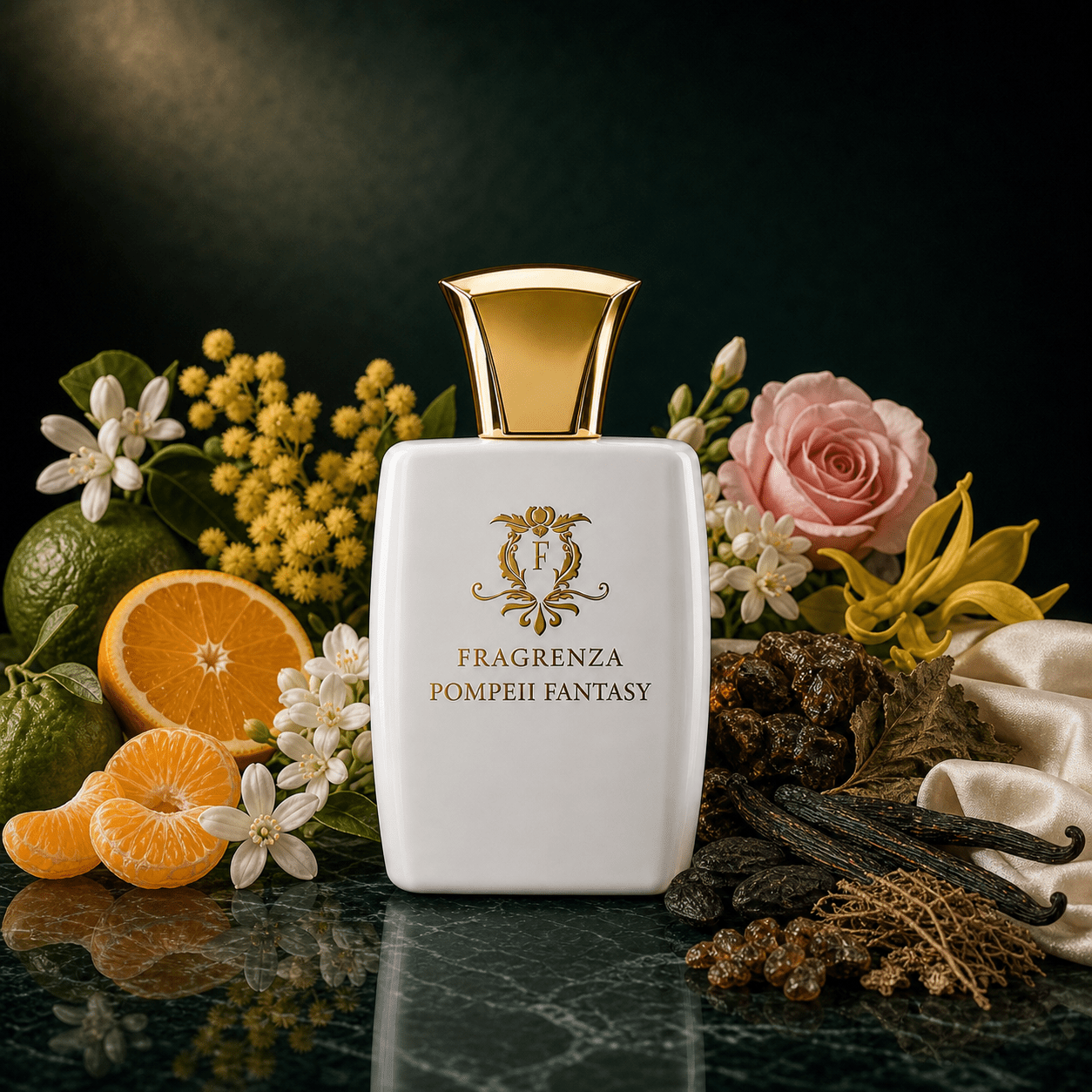
Jacques Polge served as Chanel’s in-house perfumer from 1978 to 2014, a 36-year tenure during which he composed every major Chanel feminine launch — Coco, Coco Mademoiselle, Allure, Chance, and Bleu de Chanel among them. His work has shaped the modern Chanel olfactory identity in ways that define what the brand means to multiple generations of wearers. Below is a profile of his style and the affordable Fragrenza alternatives that capture his most-cited compositions.
Polge’s signature aesthetic
Polge’s compositions trade on disciplined refinement — bright bergamot-and-citrus openings, polished sophisticated hearts, substantive but never aggressive bases. His Chanel work specifically pursued the brand’s “Mademoiselle” aesthetic: polished, modern, slightly classical, distinctly French.
Where other perfumers chase distinctiveness through unusual notes or aggressive projection, Polge chased it through perfect proportions. A Polge composition is recognisable not because of any single note but because of how the notes balance. The bergamot is never too sharp, the rose never too sweet, the patchouli never too earthy. Everything sits in disciplined equilibrium.
Polge’s most-cited compositions and their dupes
Coco Mademoiselle (Chanel, 2001)
Polge’s modern feminine pillar — sparkling orange, rose-jasmine-ylang heart, patchouli-vetiver-vanilla base. Among the most universally recognised feminines of the past two decades. Captured by Chanel Coco Mademoiselle dupe.
Chanel Allure Sensuelle (2005)
The denser oriental-floral counterpart to Allure — bergamot, iris-jasmine-rose-vetiver heart, amber-patchouli-vanilla-frankincense base. Captured by Chanel Allure Sensuelle dupe.
Bleu de Chanel (2010)
Polge’s masculine pillar of the modern era — citrus, mint, ginger, sandalwood, incense. Captured by Chanel Bleu de Chanel dupe.
The Jacques Polge approach
What makes Polge distinctive within commercial perfumery is his 36-year commitment to Chanel’s specific olfactive aesthetic. Most commercial perfumers work across multiple brands and house styles; Polge built one house’s identity over a generation. The result: an unusual coherence in his body of work — every Polge composition feels like a Chanel composition first.
This focused-on-one-house approach is rare in modern perfumery. Most contemporary niche perfumers (Becker, Constant, Momo) work across multiple brands; Polge’s career belongs to a more vintage tradition of perfumer-as-house-signature.
Building a Polge-style collection
A two-bottle Polge collection captures Chanel’s main directions: Chanel Coco Mademoiselle dupe for modern feminine pillar (the Coco Mademoiselle direction) and Chanel Allure Sensuelle dupe for denser cool-weather evening wear (the Allure Sensuelle direction). Add Chanel Bleu de Chanel dupe for masculine wear and you’ve captured most of Polge’s modern Chanel olfactory range.
What Polge’s work tells us about luxury perfumery
Polge’s 36-year tenure at Chanel demonstrates that disciplined refinement can be a sustainable career strategy. His commercial success — particularly the consistent success of Coco Mademoiselle across two decades — suggests that perfectly proportioned, slightly classical compositions have enduring appeal even as fashion shifts toward more experimental directions.
For wearers exploring Chanel’s olfactory identity, Polge’s compositions are the foundation. Coco Mademoiselle in particular remains the most-recommended Chanel feminine entry across two decades of beauty editorial — and the affordable dupe market has matured to capture the signature character at a small fraction of the retail cost.