
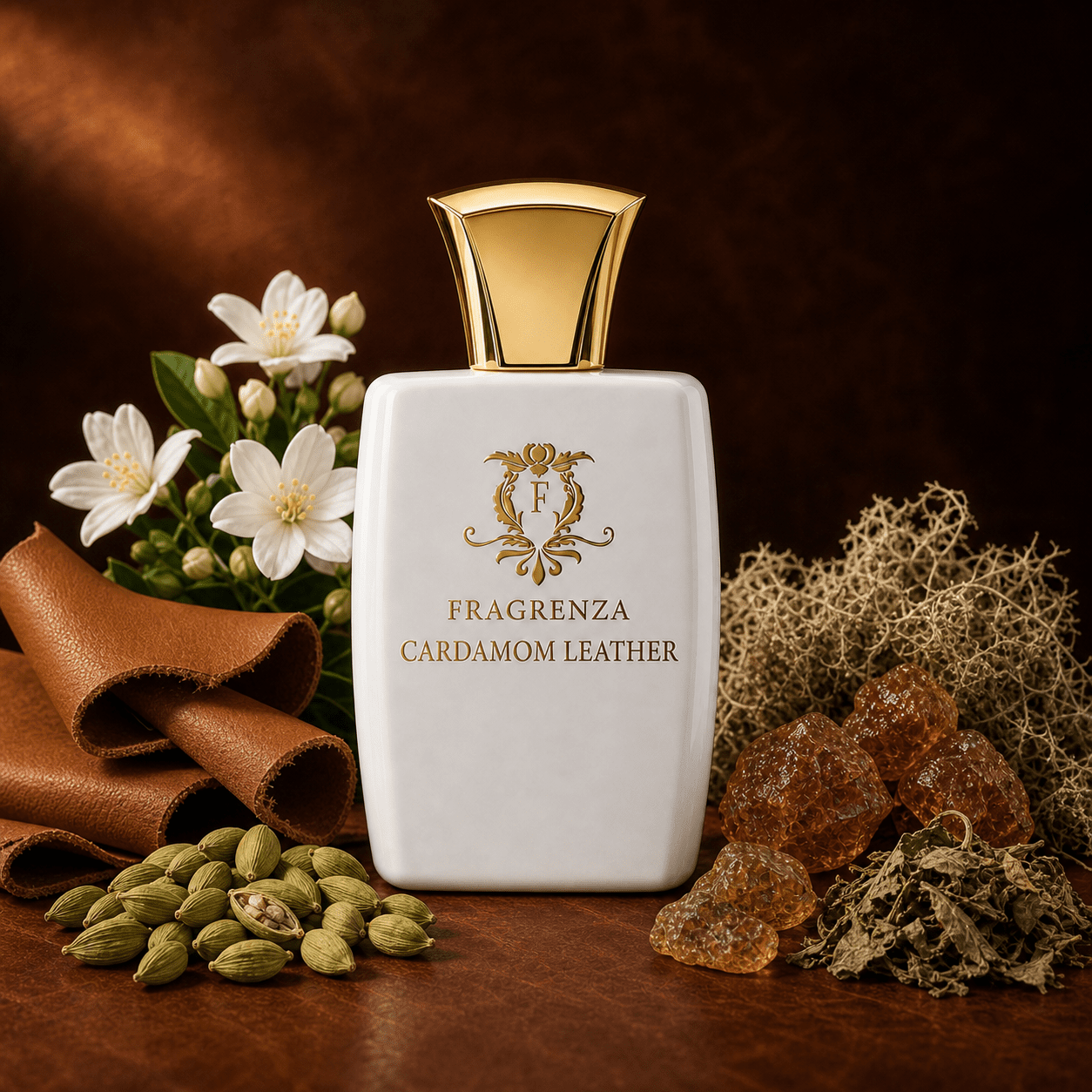
The Tom Ford Private Blend collection — launched in 2007 with twelve initial releases — is one of the most influential luxury fragrance lines of the past two decades. The line redefined what “niche-luxury” perfumery could mean for a designer brand, spawned an entire generation of dupes, and produced commercial pillars (Tobacco Vanille, Tuscan Leather, Oud Wood) that remain best-sellers seventeen years later. Below is the brief history of the Private Blend line.
The 2007 launch
Tom Ford had launched his eponymous luxury brand in 2005 after a long career at Gucci. The fragrance line followed in 2007, with the Private Blend collection positioned as the brand’s high-end perfume offering — distinct from the more accessible Signature line.
The original Private Blend launch featured twelve compositions: Tobacco Vanille, Tuscan Leather, Italian Cypress, Oud Wood, Tobacco Oud, Velvet Gardenia, Black Orchid (the brand’s first release, technically Signature-tier but with Private Blend ambition), and others. The retail pricing — initially $200+ for 50ml — positioned the line at the top of the designer market, near the bottom of the niche-luxury tier.
What made the launch distinctive: each composition pursued a clear concept (tobacco-vanilla, saddle-leather, Italian-cypress, oud-and-cedar) executed with substantial perfumery craft. The dense character of each release distinguished Private Blend from the polished accessible Tom Ford Signature line and positioned the collection alongside true niche-luxury brands like Creed and Amouage.
The commercial impact
By 2010, several Private Blend releases had become commercial pillars. Tobacco Vanille (cool-weather evening dense gourmand) and Tuscan Leather (confident saddle-leather statement) emerged as the line’s bestsellers. By 2015, Oud Wood had become the gateway niche-oud composition for Western wearers — captured affordably by Tom Ford Oud Wood dupe.
The 2018 reformulation and mainstream-release of Ombré Leather (originally Ombré Leather 16 from 2013, moved into the Signature line) extended the brand’s leather direction. Captured affordably by Tom Ford Ombré Leather dupe.
The 2018 launch of Lost Cherry — Black Cherry, almond, rose, tonka — became the line’s modern cultural moment. By 2022, Lost Cherry had spawned TikTok recommendation videos that accelerated the entire Private Blend cultural visibility. Captured affordably by Tom Ford Lost Cherry dupe.
The expansion years
Between 2007 and 2024, the Private Blend line expanded from twelve initial releases to over fifty compositions. Each expansion explored new territory: Arabian Wood (white floral, captured by Tom Ford Arabian Wood dupe), Costa Azzurra (Mediterranean coastal, captured by Tom Ford Costa Azzurra dupe), Sahara Noir (Middle-Eastern incense, captured by Tom Ford Sahara Noir dupe), Champaca Absolute (wine-cognac-magnolia, captured by Tom Ford Champaca Absolute dupe), Bitter Peach (peach-rum-vanilla, captured by Tom Ford Bitter Peach dupe), and F***ing Fabulous (clary-sage-leather-almond, captured by Tom Ford Fucking Fabulous dupe).
Why Private Blend matters in fragrance history
The Private Blend line’s significance extends beyond commercial success. It demonstrated that a designer brand could credibly enter niche-luxury territory by producing compositions that matched (or exceeded) the perfumery craft of established niche houses like Creed, Amouage, and Maison Francis Kurkdjian. Before Private Blend, the niche-luxury market was largely the territory of independent or boutique houses; after Private Blend, designer brands routinely competed in the same tier.
The line also helped establish “niche-luxury” as a coherent market category in mass-market awareness. Pre-Private Blend, most wearers saw fragrance as a designer category ($50-$150) versus a “perfume” mystery category (anything more expensive). Post-Private Blend, the existence of a $200-$400 luxury tier became broadly understood, opening the cultural space for the modern dupe industry that captures the signature character at affordable pricing.
The Private Blend dupe market
The cultural visibility and consistent quality of the Private Blend collection produced the largest dupe market in modern perfumery. By 2024, dozens of dupe houses offered credible reconstructions of every major Private Blend release. The Fragrenza catalogue specifically captures the most-cited entries: Tom Ford Ombré Leather dupe, Tom Ford Lost Cherry dupe, Tom Ford Black Orchid dupe, Tom Ford Bitter Peach dupe, Tom Ford Velvet Orchid dupe, and more.
Where Private Blend is going
The line continues to expand. New Private Blend releases appear regularly, often pursuing more experimental or seasonal directions (the brand’s recent oud and cherry-flanker work). The cultural position of the line — luxury perfumery accessible to anyone willing to pay the discretionary-purchase price — appears settled for the foreseeable future.
For wearers exploring the Private Blend catalogue, the affordable dupe market makes the line’s signature character available without the discretionary purchase commitment. Whether wearing Tom Ford originals or Fragrenza-style alternatives, the Private Blend aesthetic — polished projection, substantive base notes, distinctive character — remains one of the most-cited reference points in modern perfumery.